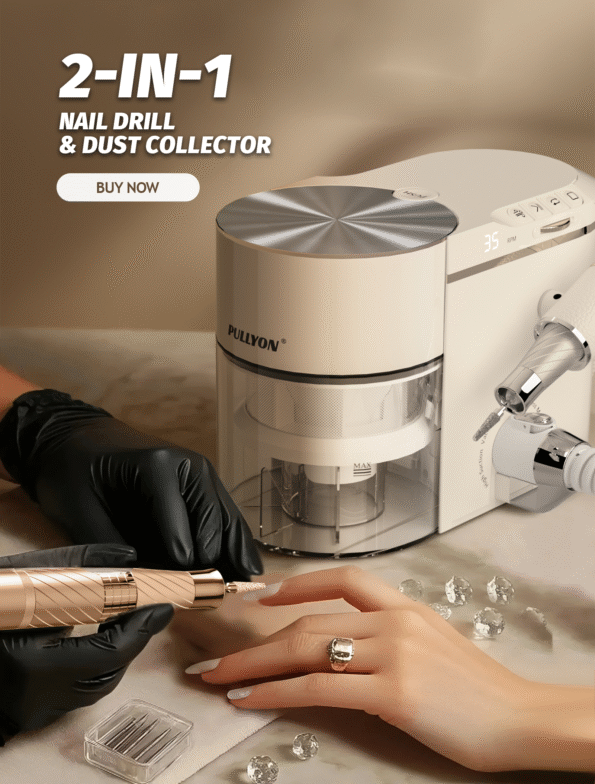
Introduction: Choosing a professional brushless nail drill is an important step toward safer, more precise manicures. This guide explains motor performance, speed control, ergonomics, and bit selection so salon professionals and home users can choose with confidence.
How a brushless nail drill supports professional work
Brushless motors use electronic commutation instead of physical brushes. With fewer friction points, they can produce lower heat, consistent torque, longer service life, and quieter, lower-vibration operation. Those advantages are especially useful during long services, detailed refinement, and repeated salon appointments.
Choose the right speed and torque
Speed should match your product, bit, service, and training. A portable 35,000 RPM model offers useful headroom for gel removal, shaping, and finishing, but maximum speed is not always best. Begin slowly, increase gradually, and use light pressure while keeping the bit moving. Consistent torque matters because it helps the bit maintain control instead of stalling when it meets enhancement product.
Salon or personal nail care setup?
For a busy salon, prioritize a comfortable handpiece, forward and reverse rotation, stable controls, easy cleaning, and a motor designed for frequent use. For personal care, a compact 35,000 RPM drill with intuitive controls and low vibration can provide professional capability without taking over the workspace. See the PULLYON nail drill collection to compare suitable equipment.
Basic bit pairing for better results
Diamond bits for detail
Fine diamond bits are useful for sidewalls, cuticle-area detail, and gentle surface refinement. Use the appropriate shape and grit, and never press hard against the natural nail.
Carbide bits for trained removal
Carbide bits can remove enhancement product efficiently when used by a trained technician. Keep the bit moving and follow the accessory instructions.
Sanding bands and polishing bits
Use fresh sanding bands for controlled smoothing and preparation. Mandrels and polishing bits help soften edges during finishing. Disinfect reusable bits and replace worn accessories.
Safe technique and maintenance
Wear suitable eye protection, control dust, and follow the device and bit manufacturer’s instructions. Guidance from OSHA’s nail salon safety resource also highlights the importance of managing dust and workplace exposure.
Conclusion: The best brushless nail drill combines steady torque, comfortable handling, useful speed control, and the right bits. Choose equipment that fits your service volume, then pair it with patient, well-trained technique.