Introduction: The right nail drill bits guide starts with a simple safety rule: the bit must match the material, surface, and skill level. Choosing the correct shape and grit improves control, reduces unnecessary heat, and makes each manicure more efficient. This guide explains the most useful bit materials and applications for professionals and careful home users.
Material breakdown for a nail drill bits guide
Carbide bits for fast removal
Carbide, often called tungsten carbide, has cutting flutes that remove enhancement product quickly. It is useful for reducing bulk in gel or acrylic, shortening extensions, and refining structure. Carbide is best handled by trained users with a light touch and a moving bit. Never use a coarse carbide bit aggressively on the natural nail.
Ceramic bits for lower heat
Ceramic bits can produce less heat during filing because their material and flute design help move dust efficiently. They are a practical choice for gel removal and surface refinement when comfort is a priority. Keep the bit moving and pause if the nail or product feels hot.
Diamond bits for detail work
Diamond bits have an abrasive surface rather than cutting flutes. They are excellent for cuticle-area detailing, sidewalls, dry skin refinement, and gentle natural-nail preparation. Use fine diamond bits around delicate areas and avoid pressing into living skin.
Common shapes and applications
Flame bit
A flame bit follows the sidewall and cuticle contour. Used carefully, it can lift non-living tissue and clean the cuticle area before product application. Work at a controlled speed and keep the point away from the skin.
Safety or smooth round-top bit
A safety bit has a rounded top that helps reduce sharp contact points. It is a useful option for beginners refining product on the surface or removing bulk with more confidence. It is still a precision tool, so light pressure and training are essential.
Barrel bit
A barrel bit is suited to smoothing the nail surface, refining enhancement product, and shortening extensions. Choose a shape and edge appropriate to the service, and avoid using a sharp edge directly against the natural nail.
Understanding fine, medium, and coarse grit levels
Fine grit is ideal for finishing, smoothing, and sensitive areas. Medium grit offers a balanced option for general shaping and controlled product refinement. Coarse grit removes bulk faster but requires experience, a steady hand, and extra care around the natural nail. Match grit to the product and never use speed as a substitute for technique.
Cleaning and sanitation
Remove visible debris with a suitable bit brush after use. For compatible reusable bits, follow the manufacturer’s cleaning and disinfection instructions. A salon may use an appropriate disinfectant or alcohol-based product as directed, then dry the bit completely before storage. Do not soak bits or use a chemical that could damage the material or coating. Use single-use sanding bands only once, and store clean bits separately from used accessories.
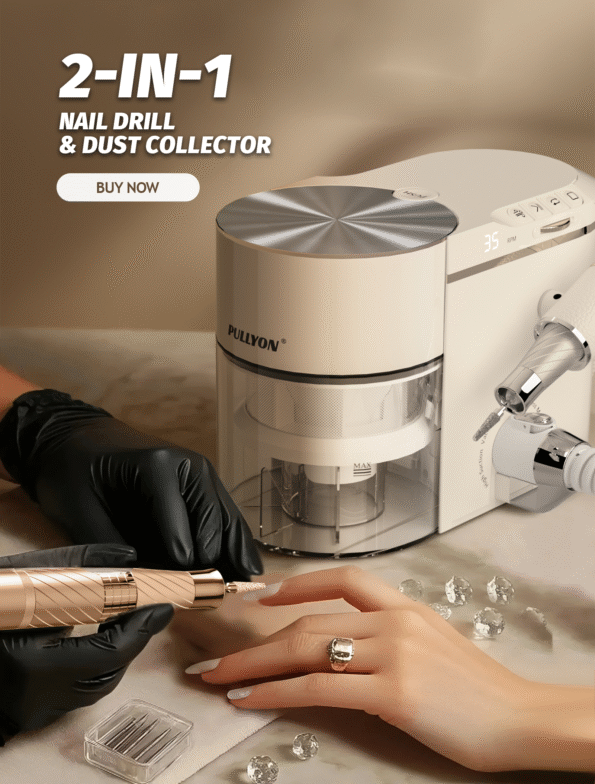
Browse the PULLYON nail drill bits collection and pair accessories with a professional PULLYON nail drill for a complete setup.
Conclusion: This nail drill bits guide makes selection easier: choose carbide for efficient enhancement removal, ceramic for comfortable lower-heat filing, diamond for detail, and the correct shape and grit for every task. Safe speed, light pressure, and consistent sanitation are the foundation of professional results.